China Top Outdoor Furniture Materials for Global Buyers?

Time:2026-10-16 Author:Liam
0%

Choosing outdoor furniture for global markets is rarely a simple design decision. Buyers must consider climate, maintenance, shipping weight, product lifespan, and customer expectations. In China’s manufacturing sector, teak, aluminum, stainless steel, PE rattan, and compact laminate are common material options. Each performs differently beside a humid seaside, on a sunny hotel terrace, or in a freezing commercial courtyard.

Many buyers ask, “what is the best furniture material for outdoor use?” The honest answer depends on the project. Powder-coated aluminum is lightweight, corrosion-resistant, and suitable for large hospitality orders. Teak offers natural oils and a warm appearance, but it needs responsible sourcing and regular care. PE rattan creates a comfortable woven look, although cheap fibers may crack after prolonged ultraviolet exposure. Stainless steel provides strong structural support, yet it can increase product weight and total freight costs. Small details matter.

Quality is not guaranteed by material names alone. Factory experience, welding accuracy, coating thickness, drainage design, hardware quality, and outdoor testing all influence performance. A chair may look impressive in a showroom but fail after one wet winter. That possibility deserves attention. Global buyers should request material specifications, finish samples, test records, warranty terms, and clear maintenance instructions before placing an order. Suppliers should also explain recycled content, wood traceability, and packaging protection honestly. There is no perfect material. The strongest choice balances appearance, climate resistance, budget, repairability, and the real habits of end users. For this reason, comparing China’s leading outdoor furniture materials requires practical evidence, not attractive catalog photography.
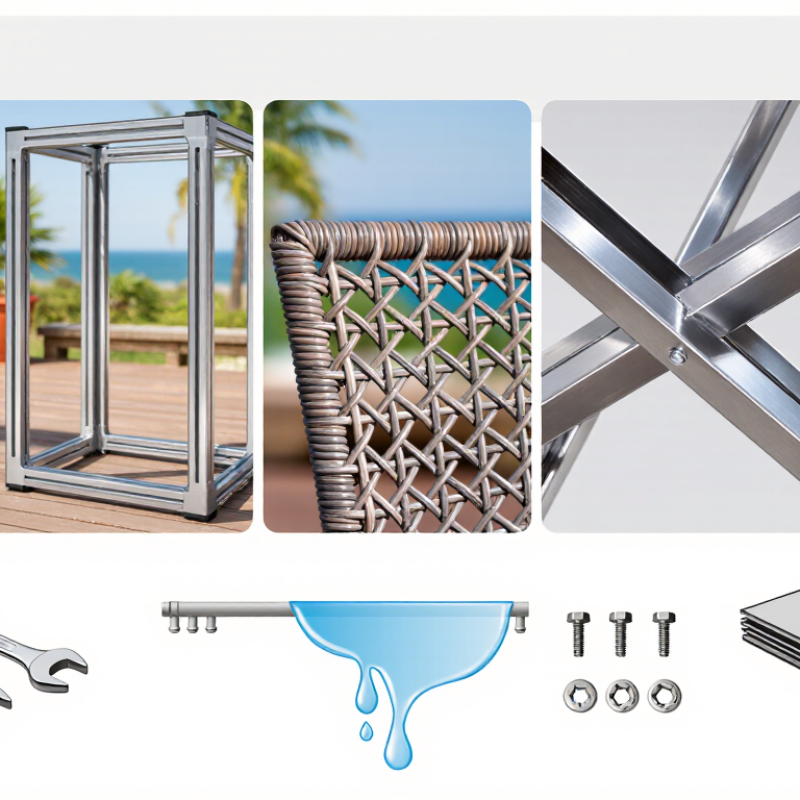
China Top Outdoor Furniture Materials for Global Buyers?

Outdoor Furniture Materials: An Overview for Global Buyers

For global buyers, outdoor furniture material selection starts with climate, use, and maintenance expectations. China supplies a wide range of options, including aluminum, teak, stainless steel, engineered wood, and synthetic rattan. Aluminum is lightweight and resists rust, making it practical for balconies and coastal hospitality projects. Powder coating improves surface protection, but poor preparation can cause peeling. Ask for coating thickness, alloy details, and test records.

Natural teak offers warmth and strong outdoor performance. It still changes color, develops surface cracks, and needs realistic care planning. Synthetic rattan is lighter and more affordable, yet its quality depends on resin stability and weaving density. In direct sunlight, weak materials may become brittle within a few seasons. Request UV-aging data, not only attractive product photos. Small samples can reveal loose weaving, sharp edges, or uneven coating.

Stainless steel suits demanding commercial environments. However, salt air can stain lower-grade surfaces, especially around welds and fasteners. Plastic furniture is easy to clean, but heat, fading, and recycled-content claims require careful checking. Material choice should match packaging, shipping distance, assembly, and local repair skills. Confirm moisture tests, load testing, color consistency, and replacement-part availability with suppliers. No material is perfect. A lower-cost option may become expensive after repeated repairs.

Outdoor Furniture Materials: An Overview for Global Buyers

Representative density values help buyers compare material weight, transport efficiency, and structural feel when evaluating outdoor furniture for different markets.

Data shown are representative dry-material density values in g/cm³: aluminum 2.70, stainless steel 7.95, carbon steel 7.85, teak 0.66, and HDPE 0.95. Actual values may vary by alloy, moisture content, additives, and manufacturing process.

Lower-density materials such as aluminum, teak, and HDPE can reduce shipping weight, while steel provides a higher-density option with a solid feel. Global buyers should also assess corrosion resistance, UV stability, maintenance requirements, recyclability, and local climate conditions before selecting a material.

Aluminum, Steel, and Wrought Iron: Strengths and Limitations

For global buyers, aluminum offers a strong balance between low weight and outdoor durability. The International Aluminium Institute reported 70.6 million tonnes of primary aluminum production in 2023. This scale supports stable supply and broad fabrication capacity in China. Aluminum frames are easier to move and install. They also resist rust better than untreated steel. However, thin profiles can flex under heavy loads. Powder coating can chip near sharp edges, exposing the surface.

Steel provides higher stiffness and often a lower material cost. The World Steel Association recorded 1,888.2 million tonnes of crude steel production worldwide in 2023. That capacity supports many tube sizes and custom structures. Steel furniture feels solid under frequent commercial use. Its weakness is corrosion, especially around welds, drilled holes, and trapped water. Buyers should request coating thickness, salt-spray test details, and drainage design. A shiny finish proves little.

Wrought iron creates visual weight and traditional detail. It suits courtyards, hotels, and projects seeking a handmade appearance. Yet it is heavier than aluminum and can demand more protective maintenance. The term “wrought iron” also needs checking; some suppliers use it for mild-steel products. Ask for the actual grade and fabrication method. ISO 12944 corrosion categories can help match coatings with coastal or humid exposure. Still, paperwork cannot replace a close inspection of welds and coating continuity. That part is often missed.

Teak, Acacia, and Other Wood Options for Outdoor Use

China offers a wide range of outdoor furniture woods for global buyers. Teak remains a premium choice because its natural oils resist moisture, insects, and seasonal movement. Its golden brown surface gradually turns silver gray outdoors. That change is normal, not damage.

Acacia provides a more accessible option. It has attractive grain, good hardness, and strong visual warmth. However, its performance depends heavily on kiln drying, edge sealing, and regular maintenance. Poorly dried acacia may develop cracks after repeated rain and sunlight. I once underestimated this detail on a small patio project. That was a mistake.

Other wood options include eucalyptus, pine, and rubberwood. Eucalyptus can offer reliable strength when treated correctly. Pine is lighter and often easier to process, but it needs effective outdoor protection. Rubberwood may suit covered areas, although constant moisture can shorten its service life. Ask suppliers about wood species, moisture content, treatment methods, and coating layers. Request close-up photos of joints, table edges, and underside drainage points. These details reveal workmanship better than polished showroom images.

For international purchasing, confirm packaging strength and assembly instructions before production. Wooden furniture can arrive with crushed corners or trapped moisture if loading is careless. Sample testing helps, but one sample cannot represent every production batch. A factory inspection remains worthwhile. The best material depends on climate, budget, maintenance expectations, and shipping distance—not appearance alone.

China Top Outdoor Furniture Materials for Global Buyers? – Teak, Acacia, and Other Wood Options for Outdoor Use

Material Typical Origin / Availability Natural Weather Resistance Maintenance Requirement Typical Outdoor Service Potential* Appearance and Aging Relative Material Cost Best-Suited Applications Key Buyer Considerations
Teak South and Southeast Asia; widely traded for outdoor furniture Excellent; naturally oily and dimensionally stable Low to moderate; clean periodically, oil is optional Often 15–25+ years with suitable construction and care Golden brown when new; naturally weathers to silver-gray High Premium dining sets, loungers, benches, and high-exposure furniture Confirm legal source, chain-of-custody documentation, moisture control, and the grade of teak used
Acacia Asia, Australia, Africa, and the Americas; commonly available in plantation-grown forms Good when properly dried, sealed, and maintained Moderate; resealing is commonly needed in exposed conditions Commonly about 5–15 years, depending strongly on species, finish, and climate Varied grain and warm brown tones; may fade or gray outdoors Medium Mainstream patio tables, chairs, benches, and occasional outdoor pieces Ask for the exact botanical species, kiln-drying process, end-grain sealing, and finish system
Eucalyptus Australia and plantations in South America, Asia, and other regions Good with exterior coating and correct detailing Moderate; regular cleaning and periodic resealing are recommended Often about 5–15 years in outdoor furniture use, depending on exposure and upkeep Pinkish to reddish-brown; can weather gray if uncoated Medium Value-oriented collections, dining furniture, and large-volume programs Verify drying quality, movement control, surface coating, and responsible forestry documentation
Ipe Central and South America; supply can be more limited than common plantation woods Excellent; dense and naturally resistant to decay Low to moderate; periodic cleaning and optional UV protection Often 20–30+ years when correctly installed and maintained Dark brown to olive-brown; gradually turns gray outdoors High Heavy-duty benches, premium outdoor structures, and high-wear components High density increases machining, weight, freight, and fastener requirements; verify source legality
Western Red Cedar Western North America; established softwood supply chain Good; naturally decay-resistant but relatively soft Moderate; finish helps limit moisture movement and color change Often about 8–15 years for furniture, depending on design and exposure Light reddish-brown; weathers silver-gray and can dent more easily Medium Lightweight seating, screens, planters, and covered outdoor furniture Check knot content, grading, moisture level, and protection from ground contact
Redwood Primarily coastal California; supply and specification depend on grade and regulations Good; heartwood offers better decay resistance than sapwood Moderate; sealing helps preserve color and reduce surface checking Often about 8–15 years for furniture, with substantial variation by grade and exposure Red to reddish-brown; fades toward gray without UV protection Medium to high Decorative furniture, garden structures, and lightweight outdoor products Specify heartwood proportion, grade, moisture content, and documentation of responsible sourcing
Pressure-Treated Pine Widely available in North America, Europe, and other global markets Good with treatment; untreated pine has low outdoor durability Moderate to high; requires inspection, cleaning, and finish maintenance Often about 5–10 years for exposed furniture, depending on treatment and design Light color; knots and treatment coloration are common; may crack or check Low Budget furniture, picnic tables, utility seating, and covered applications Confirm preservative type, treatment retention, hardware compatibility, and local disposal requirements

*Service potential is an indicative range rather than a guarantee. Actual performance depends on wood grade, moisture content, joinery, drainage, UV exposure, climate, finish quality, and maintenance. Relative cost refers to the material category and may vary by market, grade, certification, freight, and processing.

Synthetic Materials: Wicker, Rattan, Plastic, and Composite Boards

China Top Outdoor Furniture Materials for Global Buyers?

For global buyers, synthetic materials offer consistent supply and flexible outdoor designs. Wicker describes a weaving method, not a single material. Synthetic rattan usually uses PE or PVC strands around a metal frame. PE wicker generally feels softer and handles sunlight better than basic PVC. Ask suppliers for UV-stability data, strand thickness, and color samples. A showroom sample can look excellent. Outdoor testing may reveal fading within months.

Plastic furniture is lightweight, washable, and practical for balconies or hospitality projects. Recycled plastic can reduce waste, but its color may vary between production batches. Check drainage holes, wall thickness, fastener strength, and load test results. Thin plastic often flexes under heat. That detail matters.

Composite boards, including wood-plastic boards, create solid-looking tabletops and benches. They resist moisture better than untreated wood, but they still expand and contract with temperature. Leave suitable gaps during installation. Dark boards can become hot in direct summer sun. I have seen attractive surfaces warp when support spacing was too wide. My judgment was wrong there. Buyers should inspect the underside, edge sealing, and replacement process, not only the finish. Request a production sample, packaging photos, and independent test reports before approving a large order. Availability is useful, but long-term performance matters more.

How to Compare Durability, Maintenance, Cost, and Sustainability

For global buyers, China’s outdoor furniture supply chain offers several practical material choices. Powder-coated aluminum is lightweight, rust-resistant, and suitable for balconies or coastal terraces. Its durability depends on alloy quality, coating thickness, drainage, and weld accuracy. Look closely at the frame joints. High humidity exposes weak finishing quickly.

Teak Teak handles rain well and develops a silver-grey surface without regular oiling. It lasts. However, responsible sourcing matters because wood quality and forest management can vary.

Synthetic rattan Synthetic rattan costs less than many natural options and creates a woven appearance, but sunlight may embrittle low-grade fibers. UV testing and fiber thickness deserve careful review.

Maintenance changes the real price. Aluminum usually needs washing with mild soap, while teak may require periodic cleaning and refinishing. Salt air also demands more frequent care.

Compare the purchase price with expected service life, repairability, packaging, and shipping volume. Prices can mislead. Recycled aluminum may reduce material impact, yet buyers should request recycled-content records and production details.

For wood, ask for traceability documents rather than relying on vague sustainability claims. Factory evidence matters. Request coating test results, material samples, warranty terms, and replacement-part availability before placing a large order.

In practical sourcing evaluations, small details often matter more than attractive catalog images. A chair that drains poorly can fail faster than a cheaper chair with better construction. Even durable materials need thoughtful design.

FAQS

Which metal is best for lightweight outdoor furniture?

Aluminum offers low weight, easy handling, and strong outdoor rust resistance. It suits balconies, patios, and frequent relocation. Thin profiles may flex under heavy loads. Powder coating can chip along sharp edges.

When should buyers choose steel furniture?

Steel provides high stiffness and a solid feel during busy commercial use. It supports many tube sizes and custom structures. However, rust often begins near welds, holes, and trapped water. Request coating thickness, salt-spray results, and drainage details.

Is wrought iron always genuine wrought iron?

Not necessarily. Some suppliers use this term for mild-steel products. Ask for the actual grade and fabrication method. Wrought iron looks traditional but weighs more and needs regular protection.

What should buyers know about teak and acacia?

Teak naturally resists moisture, insects, and seasonal movement. Its golden surface normally becomes silver gray outdoors. Acacia costs less and offers warm grain, but drying quality matters greatly. Poorly dried boards may crack after repeated rain.

Which wood details reveal manufacturing quality?

Check wood species, moisture content, treatment, and coating layers. Request close-up photos of joints, edges, and underside drainage points. Showroom images can hide weak construction. I once underestimated drying quality. That was a mistake.

Is synthetic rattan suitable for outdoor furniture?

Synthetic rattan usually uses woven strands around a metal frame. PE strands generally handle sunlight better than basic PVC strands. Ask for UV-stability data, strand thickness, and color samples. Samples can mislead. Outdoor exposure tells more.

What should buyers inspect when selecting plastic furniture?

Plastic furniture is lightweight, washable, and practical for balconies or hospitality areas. Inspect drainage holes, wall thickness, fasteners, and load-test results. Thin plastic may flex in hot weather. Recycled plastic can show batch-to-batch color differences.

Do composite boards need installation precautions?

Composite boards resist moisture better than untreated wood. They still expand and contract with temperature changes. Leave suitable gaps during installation. Dark boards can become very hot under direct summer sunlight. Wide support spacing may cause warping.

How can international buyers reduce shipping and quality risks?

Confirm packaging strength and assembly instructions before production. Inspect corners, joints, underside areas, and drainage points. Request production samples, packaging photos, and independent test reports. One sample cannot represent every batch.

How should buyers match materials with project conditions?

Consider climate, budget, maintenance, and shipping distance before choosing materials. Coastal and humid areas need suitable corrosion protection. Covered spaces may accept more sensitive wood options. Appearance alone is not enough.

Conclusion

Choosing the right outdoor furniture material depends on climate, intended use, maintenance expectations, budget, and sustainability goals. Aluminum is lightweight, rust-resistant, and easy to move, while steel provides excellent strength but may require protective coatings to prevent corrosion. Wrought iron offers a classic, heavy-duty option, although it can be less convenient to handle and maintain. Among wood choices, teak is naturally durable and moisture-resistant, acacia offers a balance of beauty and affordability, and other treated woods can work well when properly sealed.

Synthetic options such as wicker, rattan, plastic, and composite boards provide flexibility in design and often require less maintenance. They can be practical for humid environments, but their quality and resistance to fading or cracking vary. When asking “what is the best furniture material for outdoor use,” global buyers should compare expected lifespan, cleaning needs, total cost, local weather conditions, recyclability, and responsible sourcing. The ideal material is the one that offers reliable performance while matching the buyer’s budget, aesthetic preferences, and environmental priorities.

Liam

Liam

Liam is a dedicated marketing professional with a profound expertise in the industry, where he excels at highlighting the unique advantages of our core products. With a keen understanding of market trends and consumer needs, Liam frequently updates our company’s professional blog, providing......