Why Is Modular Furniture Becoming More Popular in 2026?

Time:2026-09-06 Author:Aria
0%

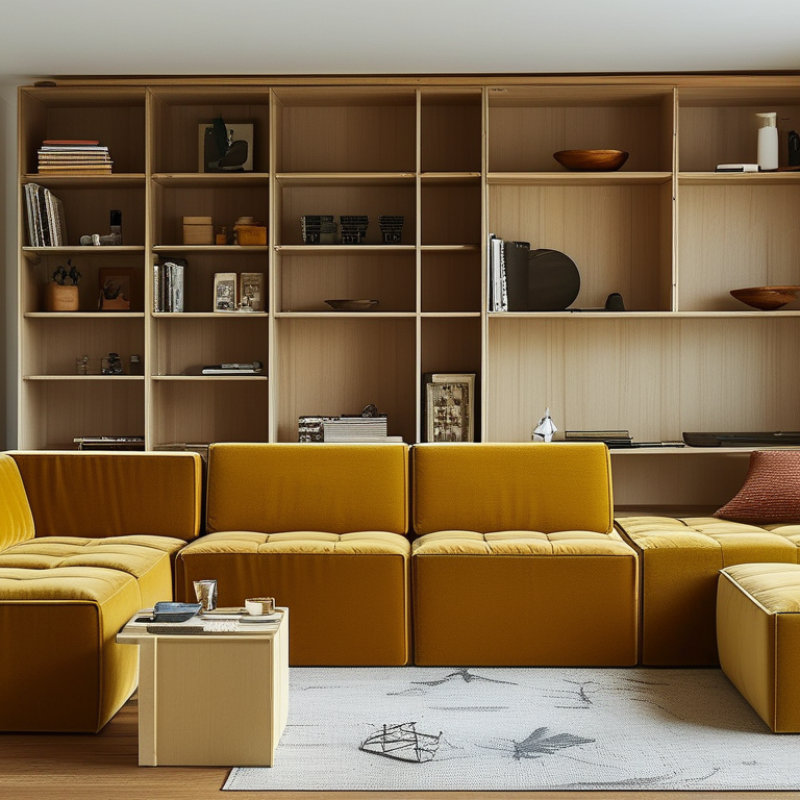
In 2026, furniture is becoming less permanent, more responsive, and easier to adapt. A modular sofa can shift from a compact two-seat arrangement to a spacious corner design. A shelving system may separate a living room today and support a home office tomorrow. These simple changes reflect how people use their homes now. Many rooms serve several purposes, especially in apartments, shared homes, and smaller urban spaces.

So, why is modular furniture becoming more popular? Flexibility is a major reason, but it is not the only one. Modular pieces can help homeowners manage changing needs, moving plans, and limited floor space. Buyers may replace one section instead of discarding an entire product. That can reduce waste, although the environmental benefit depends on materials, manufacturing, transport, and product lifespan. The label “sustainable” should not be accepted without questions.

Practical experience also matters. A well-designed modular cabinet can fit around a narrow doorway, while adjustable seating can create clearer walking space for guests. Manufacturers increasingly focus on repairable parts, washable covers, and standardized connections. These details make daily use less frustrating. Still, modular furniture has weaknesses. Connectors may loosen, repeated rearrangement can damage surfaces, and some systems become expensive after adding many modules. This article examines the design, cost, sustainability, and lifestyle factors behind the trend, while considering where modular furniture truly delivers value and where its promise may be overstated.
Why Is Modular Furniture Becoming More Popular in 2026?

Definition and Core Features of Modular Furniture

Why Is Modular Furniture Becoming More Popular in 2026?

Modular furniture is made from separate units that can be combined, moved, or replaced. These units may include shelves, cabinets, seats, desks, or storage boxes. Together, they create a flexible furniture system for changing spaces. Unlike fixed furniture, modular pieces can adapt when a room’s purpose changes.

Its core features are flexibility, easy reconfiguration, efficient storage, and repairable parts. A homeowner might begin with a compact two-seat arrangement, then add an ottoman after moving into a larger apartment. A modular desk can also shift from a study corner to a shared work area. This adaptability matters as homes become smaller and lifestyles become less predictable. However, modular furniture is not automatically practical. Poorly designed connectors can loosen, and mismatched units may look cluttered. That is worth considering.

Tips: Measure doors, walls, and walking paths before buying. Choose pieces with strong connectors and clear assembly instructions. Check whether individual parts can be replaced. Neutral colors usually make future changes easier. Leave some empty space; more storage is not always better.

From a professional planning perspective, the best systems balance movement with stability. Durable panels, smooth edges, and reliable hardware improve daily use. Look for materials that resist moisture and repeated assembly. A useful modular design should save space without making the room feel temporary. It should also remain understandable when parts are rearranged. That detail is often overlooked.

How Modular Furniture Systems Are Designed and Assembled

Modular furniture is designed as a system, not a collection of isolated pieces. Each module follows shared dimensions, connection points, and material rules. Grand View Research’s 2024 report valued the global modular furniture market at approximately $8.7 billion in 2023. It projects a 6.8% annual growth rate through 2030. Statista Market Insights estimates the wider furniture market exceeded $700 billion in 2024. These figures show a large opportunity, but market definitions differ.

Designers usually begin with a dimensional grid. A cabinet, shelf, or seat must align with neighboring parts. Computer-aided design helps control panel thickness, drilling positions, and connector tolerances. Prototype units are then assembled repeatedly. Designers check wobbling, uneven gaps, and difficult hand movements. The best systems use reversible fasteners and clearly labeled components. Flat-pack shipping reduces volume, while standardized parts simplify replacement. That part is less glamorous.

Professional assembly also needs load testing and user observation. A shelf may pass a calculation yet feel unstable in a real hallway. Guides should show screw direction, tightening limits, and safe handling positions. QR instructions can help, although they fail when users lack reliable internet access. Designers should record assembly time and error rates, not just appearance. The uncomfortable truth is that modularity can add connectors, waste, and confusion. Better systems reduce those problems through fewer parts, repairable joints, and honest testing.

Why Is Modular Furniture Becoming More Popular in 2026? - How Modular Furniture Systems Are Designed and Assembled

Typical Design and Assembly Specifications for Modular Furniture Systems
System Dimension Typical Standard or Range How It Is Designed Common Assembly Method Practical Benefit
Interchangeable Modules Widths commonly organized in repeatable increments, such as 300, 400, 600, or 800 mm Cabinets, shelves, drawers, and panels share compatible connection points and overall depths. Cam-and-dowel fittings, bolts, threaded inserts, or concealed brackets. Parts can be rearranged, expanded, or replaced without redesigning the entire unit.
Panel Thickness About 16–19 mm for many cabinet and shelving panels The thickness is selected to balance rigidity, usable interior space, weight, and hardware compatibility. Pre-drilled holes, edge connectors, dowels, and confirmat-style screws may be used. Creates a consistent structural grid while allowing panels to be mass-produced and replaced.
Seating Height Approximately 430–480 mm from floor to seat surface Seat modules are sized for everyday posture and coordinated with standard dining and occasional tables. Clip-in legs, bolt-on bases, or frame joints with replaceable feet. Makes individual seats, benches, ottomans, and sectional units easier to combine.
Table and Desk Height Approximately 710–760 mm for fixed-height work or dining surfaces Legs, tops, cable-management parts, and storage modules are designed as separate compatible components. Threaded inserts, bolts, knock-down brackets, or slide-on frame connections. Supports relocation, repair, and configuration changes when room functions evolve.
Storage Depth Approximately 250–400 mm for shelving; about 550–650 mm for hanging garments Depth is matched to the intended contents so the system uses floor area efficiently. Adjustable shelves rest on shelf pins, clips, or concealed support rails. Users can combine shallow display storage with deeper wardrobe or utility modules.
Adjustable Shelving Shelf-pin hole spacing is often organized on a regular 32 mm system Vertical rows of holes allow shelves and interior accessories to be repositioned. Metal or polymer shelf pins, locking clips, and removable shelves. Accommodates books, equipment, containers, and changing storage requirements.
Knock-Down Construction Furniture is delivered as separate flat-packed or compact components Designers divide the product into panels and subassemblies that can pass through doors, lifts, and stairways. Tool-assisted or tool-free connectors, alignment dowels, and locking fasteners. Reduces transport volume and simplifies delivery to apartments, offices, and other constrained spaces.
Reversible Connections Fasteners are selected for repeated disassembly without damaging the main panels Connection points are reinforced and positioned so components can be removed in a controlled sequence. Bolts, threaded inserts, cam locks, clips, and removable brackets. Makes moving, maintenance, upgrading, and end-of-life separation more practical.
Assembly Sequence Base or frame → primary panels → shelves and drawers → doors and accessories The sequence is planned to preserve access to fasteners and maintain alignment during installation. Align, loosely fasten, square the unit, fully tighten, and then install adjustable parts. Improves stability and reduces the risk of misalignment or damaged hardware.
Replacement Components Common replaceable parts include shelves, doors, drawer fronts, legs, handles, and fasteners Components are standardized so a damaged or outdated section can be changed independently. Screw-on, clip-on, slide-in, or lift-off attachment methods. Extends useful service life and supports gradual upgrades instead of complete replacement.
Space Adaptability Modules can be arranged linearly, in corners, back-to-back, or as freestanding units The system uses repeatable geometry and finished surfaces on selected sides. Independent modules are joined with brackets, alignment pins, or shared side panels. Responds to smaller homes, hybrid work areas, rental properties, and frequently changing layouts.

Note: Dimensions shown are typical industry ranges for planning purposes; actual requirements vary by furniture type, ergonomics, materials, structural loads, and applicable safety standards.

Key Reasons for Its Growing Popularity in 2026

In 2026, modular furniture is moving from a niche solution into ordinary homes. The main reason is flexibility: units can be rearranged when rooms, budgets, or household needs change. A two-piece storage wall may fit a narrow apartment today, then expand after a move. This adaptability matters to renters, remote workers, and families sharing limited floor space. From practical fitting experience, measuring doorways and wall outlets remains essential. Modular does not mean automatically convenient.

Manufacturers increasingly design replaceable panels, adjustable shelves, and standardized connectors. These details can extend useful life because one damaged section may be repaired instead of discarded. Consumers also appreciate clearer cost control. They can buy a basic frame now and add drawers or a desk later. That staged approach reduces pressure, though extra modules may cost more over time. Careful comparison is still needed.

Smaller homes and hybrid work have strengthened demand for furniture with multiple roles. A cabinet can divide a room, hide cables, and store work materials after office hours. Color panels and handles allow personal changes without replacing the entire piece. Online planning tools make dimensions easier to test, but digital layouts can miss awkward corners or uneven floors. The environmental benefit is real only when owners keep, repair, and reuse components. That qualification is often overlooked.

Benefits Across Homes, Offices, and Changing Lifestyles

Modular furniture is gaining attention because homes and workplaces now change faster than their layouts. A desk may become a dining table, while a meeting area may need to support focused work tomorrow.

Grand View Research projects the global modular furniture market to grow at about 6.7% annually from 2024 to 2030. That growth reflects practical pressure, not only visual trends.

In homes, modular pieces help residents manage smaller rooms, remote work, and changing family needs. A wall-mounted desk can fold away after a video call. Stackable storage can separate children’s books from household tools.

The 2024 IKEA Life at Home Report found that 36% of people feel their home does not support their needs well.

Modular systems offer adjustment, although they can still feel expensive when every accessory is purchased separately.

Offices also need furniture that responds to hybrid schedules.

Gensler’s 2024 Global Workplace Survey reported that workers spend most of their office time in collaborative activities, yet individual focus remains necessary. Movable partitions, shared worktables, and lightweight seating can reshape a floor within minutes. They reduce layout waste.

However, flexibility is not automatically successful. Poorly designed modules may wobble, look temporary, or create storage problems.

Facility managers should measure real usage, repair access, and long-term durability before choosing adaptable systems.

Small details matter.

Limitations, Market Trends, and Future Development

Why Is Modular Furniture Becoming More Popular in 2026?

Modular furniture is gaining attention because homes are becoming smaller and more changeable. A sofa may need to fit a narrow apartment today, then move to a larger room later. Modular units support that transition with separate seats, shelves, panels, and storage boxes. In real residential projects, installers often value parts that pass through tight elevators and stairways. Damaged sections can also be replaced without discarding the entire piece.

Limitations remain visible. Connectors may loosen after repeated movement, especially on uneven floors. Some systems look flexible but offer only a few practical configurations. Custom sizes can raise costs, while extra modules may occupy more space than expected. Buyers should check material thickness, joint strength, cleaning access, and repair procedures. A low price does not always mean lower environmental impact. More pieces can also mean more packaging and transport.

Market trends are pushing manufacturers toward repairable parts, recyclable materials, and digital room-planning tools. Future systems may use standardized fittings across different furniture types. That could reduce waste and simplify repairs. However, compatibility needs clear technical standards. Without them, modular furniture may create another kind of dependency. Designers should also test long-term stability, not just attractive showroom layouts. The promise is strong, but the furniture still has to survive muddy shoes, moving children, and ordinary human impatience.

Why Is Modular Furniture Becoming More Popular in 2026?

Urban growth and increasingly compact living environments are strengthening demand for adaptable furniture, while price, durability, and assembly remain important limitations.

The chart uses global urbanization projections from the United Nations World Urbanization Prospects. The growing urban population creates more demand for space-efficient and reconfigurable furniture. However, modular products still need to overcome higher initial costs, complex assembly, and concerns about long-term durability. These trends support continued development toward lightweight materials, repairable components, and digitally configurable designs.

Source: United Nations, World Urbanization Prospects. Values are rounded global estimates and projections.

FAQS

: What is modular furniture?

: It uses separate units that can be combined, moved, replaced, or rearranged. These units may include shelves, cabinets, seats, desks, and storage boxes.

Why is modular furniture becoming more popular?

Rooms and lifestyles change quickly. A compact desk can later become a shared worktable. A small seating setup can gain an ottoman after a move.

What should I measure before buying modular furniture?

Measure doors, walls, ceiling height, and walking paths. Check whether large panels can enter elevators or narrow hallways. A beautiful system may fail at the doorway.

How can I choose a reliable modular system?

Look for strong connectors, smooth edges, durable panels, and clear instructions. Check whether parts resist moisture and repeated assembly. Replaceable components are especially useful.

Does modular furniture always save space?

No. It can improve storage, but too many units may make a room feel crowded. Leave open floor space around desks, chairs, and walkways. More storage is not always better.

How is modular furniture designed and assembled?

Designers use shared dimensions, connection points, and material rules. They test prototypes for wobbling, uneven gaps, and difficult movements. Clear labels help. Confusing instructions still happen.

Can modular furniture work in small homes?

Yes. A folding wall desk can disappear after a video call. Stackable storage can separate books, tools, and household supplies. However, accessories may make the complete system expensive.

How can offices use modular furniture?

Movable partitions, shared tables, and lightweight seating can reshape work areas quickly. They support collaboration while preserving space for focused work. Actual usage should be measured before buying.

What are the main disadvantages of modular furniture?

Connectors may loosen, parts may look mismatched, and extra components can create waste. Some systems feel temporary or complicated after rearrangement. Flexibility has limits.

How can modular furniture remain useful for years?

Choose repairable joints, replaceable parts, neutral colors, and durable hardware. Keep assembly instructions somewhere accessible. Review stability after moving pieces.

Conclusion

Modular furniture is made from interchangeable components that can be combined, rearranged, expanded, or replaced according to changing needs. Its design usually focuses on flexible connections, practical assembly, efficient transportation, and multiple layout possibilities. This article explores why is modular furniture becoming more popular in 2026, as people increasingly seek adaptable solutions for smaller homes, shared spaces, remote work, and frequently changing lifestyles.

The growing appeal of modular furniture comes from its space efficiency, customization, easier maintenance, and potential long-term value. It can serve different purposes across homes, offices, rental properties, and multifunctional environments while reducing the need to purchase entirely new pieces after every change. However, issues such as connection durability, assembly complexity, visual consistency, and material waste still require attention. Future development is likely to focus on smarter configurations, more sustainable materials, improved user-friendly systems, and designs that balance flexibility with comfort, stability, and affordability.

Aria

Aria

Aria is a dedicated marketing professional with a deep passion for innovative strategies and a keen understanding of our company's product offerings. With a wealth of experience in the industry, Aria excels at crafting engaging content that highlights the unique features and benefits of our......