Many shoppers pause when they see a solid wood dining table priced far above a similar-looking alternative. The question is understandable: why is solid wood furniture so expensive? The answer is not simply “better materials.” Price reflects timber quality, skilled labor, careful drying, joinery, finishing, transport, and long-term service.
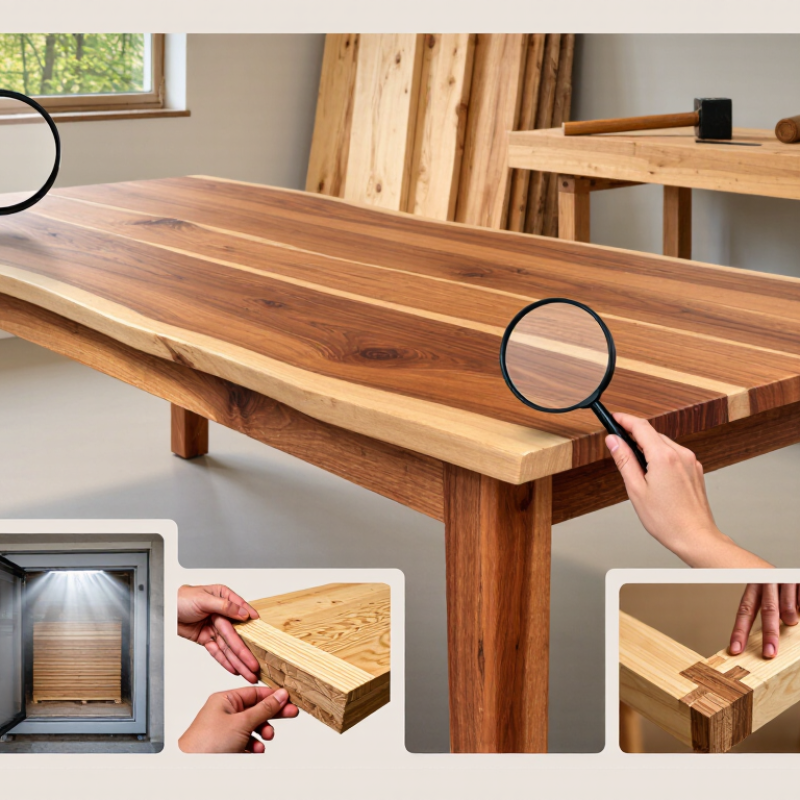
A real solid wood table begins with selected boards, not a printed surface over a composite core. Its grain may run across a wide tabletop, with knots, color shifts, and small natural marks. Before assembly, the timber must be dried and stabilized. Poorly prepared wood can twist, split, or develop gaps after entering a heated home. Experienced makers also spend time matching boards, cutting joints, sanding edges, and applying protective finishes. Those details are easy to miss in a showroom.
Seven practical reasons explain the higher cost. They include scarce hardwood species, responsible sourcing, kiln-drying time, experienced craftsmanship, stronger construction, hand-applied finishing, and longer expected use. However, expensive does not automatically mean excellent. A high price can still hide weak joinery or unclear material claims. That deserves attention.
Look closely.
Ask where the wood came from, how it was dried, and whether repairs are supported. Check the underside, drawer joints, hardware, and finish quality. Certifications and written warranties can improve confidence, though they are not perfect guarantees. This guide examines the real cost behind solid wood furniture and separates durable value from attractive marketing. The conclusion may be less romantic than expected, but it should help buyers choose with clearer judgment.
7 Best Reasons Why Solid Wood Furniture Is So Expensive?
Solid wood furniture is made mainly from natural timber, not veneer over particleboard or fiberboard. However, the definition can vary. Some pieces use glued solid-wood panels, while others feature single slabs. That distinction matters. The USDA Forest Service’s Wood Handbook explains that wood absorbs and releases moisture, causing natural movement. Furniture makers must dry, grade, and join each component carefully. Kiln drying, accurate milling, reinforced joints, and hand sanding increase labor costs. A poorly dried table may crack, warp, or loosen after one humid season.
Market value also depends on species, grain quality, thickness, and responsible sourcing. The FAO Global Forest Resources Assessment 2020 reported that forests cover about 4.06 billion hectares worldwide, yet valuable timber is not automatically abundant or suitable for furniture. Clear boards, unusual grain, and large defect-free sections are harder to obtain. Skilled carpentry adds another layer. Mortise-and-tenon joints, dovetails, and fitted drawers require time that factory assembly often avoids. Repairability also supports a higher price, because damaged solid components can sometimes be refinished or replaced.
Still, expensive does not always mean better. I would not call every solid-wood piece an investment. Design, construction, moisture control, and maintenance matter more than the label alone. The Wood Handbook also notes that wood properties vary by species and direction, so “solid wood” is not a universal performance guarantee. Buyers should inspect joinery, panel movement allowances, finish quality, and the seller’s material documentation before paying a premium. These details define market value more reliably than weight or a rustic appearance.
7 Best Reasons Why Solid Wood Furniture Is So Expensive?
Solid wood furniture commands a higher market value because it uses durable natural material that can be repaired, refinished, and preserved for decades. The chart compares the Janka hardness of seven commonly used furniture woods, measured in pounds-force (lbf). Higher hardness generally indicates better resistance to dents and wear, although craftsmanship, wood grade, construction, design, and supply also affect the final price.
Wood hardness figures are based on published Janka hardness data from the USDA Forest Products Laboratory Wood Handbook.
7 Best Reasons Why Solid Wood Furniture Is So Expensive?
How Tree Growth and Timber Quality Affect Material Costs
A mature hardwood tree may need decades before reaching furniture-grade dimensions. The waiting period increases land, management, and harvesting costs. The FAO Global Forest Resources Assessment 2020 estimates that forests cover 4.06 billion hectares worldwide. It also reports a net forest loss of about 178 million hectares from 1990 to 2020. Scarcer, responsibly sourced timber usually carries higher purchase and verification costs.
Growth conditions also change timber quality. Slow growth can produce tighter annual rings, but density differs by species and location. A slow-grown tree is not automatically better. The USDA Forest Products Laboratory’s Wood Handbook explains that wood density strongly influences strength, stiffness, and shrinkage behavior. Boards with cracks, knots, or uneven moisture may be downgraded or discarded. That hidden waste raises the cost of each usable table panel.
Drying requires patience and control. Wood often leaves the kiln with moisture near its intended indoor range, then needs careful storage. Poor drying can cause cupping, splits, or joint movement. The result may look beautiful at first, yet fail months later. UNECE and FAO market reviews show that sawlog and lumber prices can vary widely with species, grade, region, and market conditions. Price alone cannot prove quality. Species identification, moisture testing, grading records, and legal sourcing evidence matter more. Even experienced buyers sometimes overvalue dramatic grain while overlooking internal stress.
7 Best Reasons Why Solid Wood Furniture Is So Expensive?
Why Skilled Craftsmanship Raises Production Expenses
Skilled craftsmanship is one major reason solid wood furniture costs more. A trained maker studies each board before cutting it. Grain direction, knots, moisture, and natural movement all affect the final design. This decision-making cannot be fully replaced by fast machinery.
A solid wood table may pass through several careful stages. The maker mills the boards, aligns the grain, and shapes each joint precisely. Hand-cut joinery often requires repeated fitting and testing. Small errors matter. A drawer should glide smoothly without feeling loose. A chair joint must remain stable through seasonal changes. That takes time.
Experienced craftspeople also sand surfaces by hand and inspect edges under strong light. They notice rough pores, uneven tones, and weak connection points. I once saw a nearly finished tabletop rejected because its boards moved slightly after conditioning. The delay increased labor costs, but correcting it protected the furniture’s long-term reliability. Still, craftsmanship is not perfect. Even careful makers can misjudge wood movement or create a minor color difference. Those flaws invite reflection, rather than automatic rejection, when they do not affect safety or function. Customers are paying for more than raw timber. They are paying for judgment, skilled labor, slower production, and the chance to own furniture that can be repaired instead of quickly discarded.
| No. | Cost Driver | Why It Raises Production Expenses | Measurable Industry Benchmark | Effect on the Finished Product | Reference |
|---|---|---|---|---|---|
| 1 | Slow and Selective Timber Supply | Furniture-grade hardwood must be harvested, transported, sorted, and graded before a maker can use it. Boards with knots, cracks, warp, or color variation may be rejected or cut into smaller components, increasing material waste. | Tree growth and timber quality develop over many years; usable lumber is only one portion of a harvested log. | Higher raw-material cost and more time spent selecting boards that match in color, grain, and stability. | USDA Forest Products Laboratory |
| 2 | Kiln Drying and Moisture Control | Freshly cut wood must be dried gradually to reduce shrinkage, checking, and warping. The process requires kiln energy, monitoring, storage space, and additional handling. | Indoor furniture lumber is commonly dried to approximately 6–8% moisture content, depending on climate and end use. | Longer lead times and higher processing costs, but improved dimensional stability in normal indoor conditions. | USDA Wood Handbook |
| 3 | Labor-Intensive Skilled Craftsmanship | Experienced furniture makers must interpret grain direction, correct minor imperfections, tune machines, assemble parts accurately, and make adjustments that automated production cannot always handle. | Precision joinery and hand fitting require multiple operations, including marking, cutting, dry fitting, gluing, clamping, and inspection. | Higher labor hours and wage costs, with stronger joints, cleaner details, and greater consistency. | U.S. Bureau of Labor Statistics |
| 4 | Precision Joinery and Seasonal Movement | Solid wood expands and contracts as humidity changes. Craftspeople must select suitable joints, allow movement where necessary, and fit components precisely without preventing natural movement. | Wood movement is primarily related to changes in moisture content below the fiber saturation point; tangential movement is generally greater than radial movement. | More design, machining, testing, and assembly time than products made from dimensionally stable sheet materials. | USDA Wood Handbook |
| 5 | Higher Material Waste and Grain Matching | Visible furniture surfaces often require boards with compatible grain direction and color. Makers may trim away defects or reserve premium boards for prominent areas such as tabletops and door fronts. | Lumber is graded for characteristics such as knots, checks, stain, warp, and slope of grain; higher grades generally contain fewer visual defects. | More boards may be purchased than the final piece strictly requires, raising the material cost per finished item. | Wood Database: Lumber Grading Overview |
| 6 | Multi-Stage Surface Preparation and Finishing | A durable finish usually involves sanding, cleaning, stain or oil application when required, sealing, intermediate sanding, and one or more protective topcoats. Each stage requires labor, drying space, and quality control. | Wood coatings commonly require controlled preparation and adequate drying or curing time between applications, according to the coating manufacturer. | Higher finishing labor and facility costs, plus a smoother surface and better resistance to everyday wear. | USDA Wood Handbook |
| 7 | Inspection, Repair, and Low-Volume Production | Small-batch or custom furniture spreads setup, tooling, design, inspection, and finishing costs across fewer units. Skilled makers also spend time correcting defects rather than discarding an entire piece. | Each custom item requires individual measurement, setup, fitting, finishing, and final inspection instead of one standardized production cycle. | Higher cost per unit, but greater customization, repairability, service life, and potential for long-term use. | USDA Wood Handbook |
Solid wood furniture costs more because its value begins before construction. Skilled makers select boards for strength, grain direction, and moisture stability. That careful selection reduces waste, but raises the price. Good design also matters. Balanced proportions, comfortable edges, and useful storage make a piece easier to live with for years. A thoughtful design can survive changing interiors. Trends often cannot.
Construction adds several more reasons. Dense wood can support heavy use, while mortise-and-tenon joints improve strength without relying only on screws. Properly fitted panels allow natural seasonal movement. This detail prevents many cracks and loose joints. Skilled sanding creates a smooth surface, though perfect results require time. Repairability is another advantage. A scratched solid wood table can often be sanded and refinished. Veneered or disposable furniture may offer fewer practical options. Still, solid wood is not automatically excellent. Poorly dried boards can warp, and careless construction can waste the material. I have seen expensive pieces with uneven doors and rushed joints. Price alone proves nothing.
Tips: Ask about wood moisture control, joint methods, and finish maintenance. Inspect corners, drawer movement, and the underside. A durable finish should protect the surface without hiding the grain. Oil finishes feel natural and can be refreshed, while harder coatings resist spills better. Choose based on daily use. Allow space for movement near walls and heating sources. Keep water from sitting on the surface. Small maintenance habits often protect the design, construction, and long-term value.
Solid wood furniture commands a higher price because its durability begins with the material itself. Dense timber can withstand daily meals, moving, and years of changing temperatures. In my experience, a well-built wooden table develops small marks rather than failing suddenly. Those marks can often be sanded and refinished. That repairability extends the furniture’s useful life and reduces replacement costs.
Sustainability also affects the price, although the claim needs careful examination. Responsibly managed forests, traceable timber, and skilled local production require time and certification. A maker who dries wood properly helps prevent warping, splitting, and hidden movement. However, solid wood is not automatically sustainable. Poorly sourced timber can damage ecosystems, even when the furniture looks beautifully crafted. Buyers should ask about wood origin and finishing materials.
Maintenance adds another part of the cost. Solid wood needs protection from standing water, direct heat, and prolonged sunlight. A dining table may require occasional oiling, waxing, or professional refinishing. These tasks are manageable, but they are not completely effortless. I once ignored a damp ring on an oak surface, and the stain became harder to remove. That mistake changed how I care for wood. Careless ownership can shorten its life, despite excellent construction.
Skilled makers study grain, knots, moisture, and movement before cutting. They spend time fitting joints and checking surfaces. Machines help, but judgment remains important. The price reflects labor, not timber alone.
Craftspeople align grain and shape each joint carefully. Drawers should glide without feeling loose. Chair joints must remain stable through seasonal changes. Small errors matter.
Yes. Even careful makers can misjudge wood movement or create slight color differences. Minor flaws may not affect safety or function. Perfect results are not guaranteed.
Its boards may move slightly after conditioning. Rebuilding it increases labor costs. That delay can protect long-term reliability. It also shows that production decisions are not always simple.
No. Responsible forestry and traceable timber can increase costs. Poorly sourced wood may harm ecosystems. Buyers should ask about wood origin and finishing materials.
Dense timber can handle daily meals, moving, and temperature changes. Small marks often appear before serious failure. Many surfaces can be sanded and refinished. Durability helps reduce replacement costs.
Protect it from standing water, direct heat, and prolonged sunlight. Some pieces need occasional oiling, waxing, or refinishing. Care is ongoing.
A damp ring can become harder to remove when ignored. Careless ownership may shorten the furniture’s life. Excellent construction cannot replace basic care. That is worth remembering.
Why is solid wood furniture so expensive? Its value begins with the material itself. Genuine solid wood is made from carefully selected timber, and the tree’s species, age, growth rate, grain pattern, strength, and availability all affect its cost. High-quality boards require responsible sourcing and careful drying to reduce warping, cracking, and other defects. Compared with composite materials, solid wood offers a natural appearance, structural strength, and the potential to last for many years.
The price also reflects skilled craftsmanship and thoughtful construction. Experienced makers spend time shaping, joining, sanding, and finishing each piece, while durable designs and precise details improve stability and comfort. Protective finishes help preserve the surface, and solid wood can often be repaired, refinished, or maintained instead of replaced. Its long service life, renewable material potential, and reduced need for frequent replacement add lasting value, making the initial investment higher but often more worthwhile over time.
